What SLS technology is
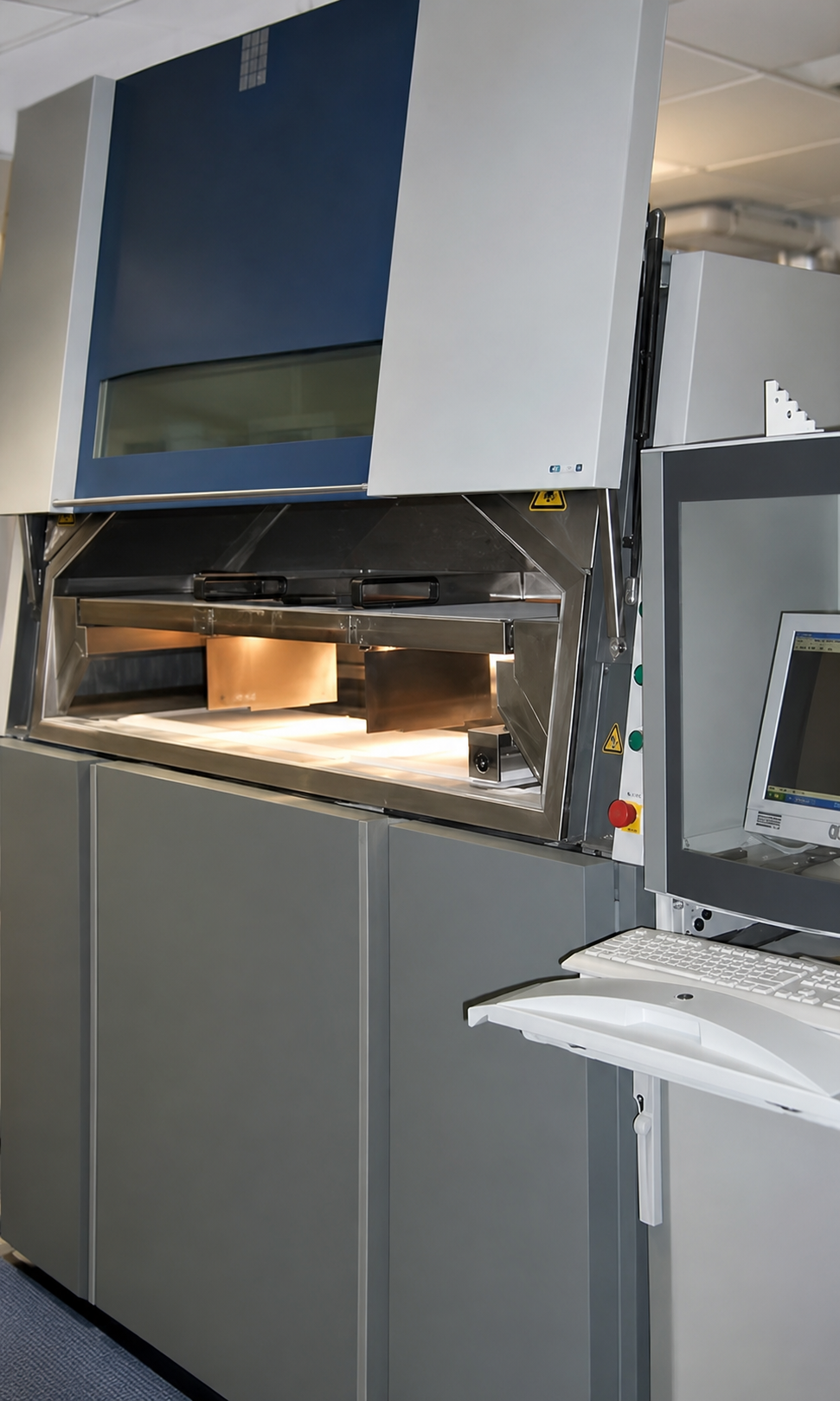
SLS (Selective Laser Sintering) is a powder-bed fusion additive technology: a laser selectively fuses a thermoplastic powder layer by layer, almost always polyamide — PA12 (Nylon 12) or PA11, sometimes filled with glass or aluminium. It changes the paradigm completely compared with FDM and DLP, because it neither deposits nor cures material: it sinters it from a powder.
The cycle is always the same. A recoater — a blade or a roller — spreads a thin layer of powder over the build platform. A CO₂ laser scans the cross-section of the part, heating the powder just below its melting point until it coalesces, i.e. sinters. The platform lowers by one layer, the recoater spreads new powder and the cycle repeats. Everything happens in a chamber kept at a high temperature, just below the polymer’s melting threshold, so the laser only has to supply the residual energy needed to complete sintering.
Why choose it
What radically distinguishes SLS is self-support: the unsintered powder surrounding the part holds it throughout the build, so no support structures are needed. This brings three advantages that FDM and SLA do not offer as easily.
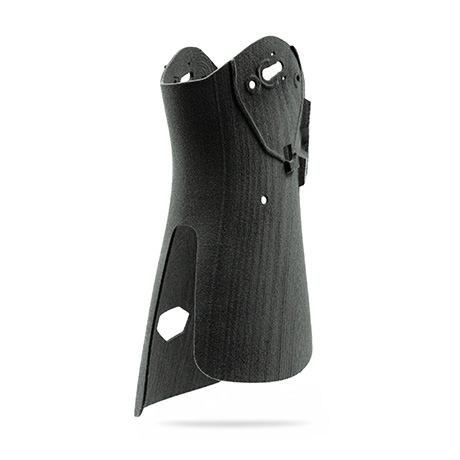
The first is complex and internal geometries — channels, undercuts, parts printed pre-assembled — achievable without worrying about overhangs or having to remove supports from inaccessible cavities. The second is three-dimensional nesting: you fill the entire chamber volume by packing parts in height as well, not just on the plane, which makes SLS very efficient for small and medium series, with dozens or hundreds of parts in a single cycle. The third is the mechanical properties: sintered PA12 gives robust, near-isotropic parts, resistant to impact and fatigue, suitable for real end-use components and not just aesthetic prototypes.
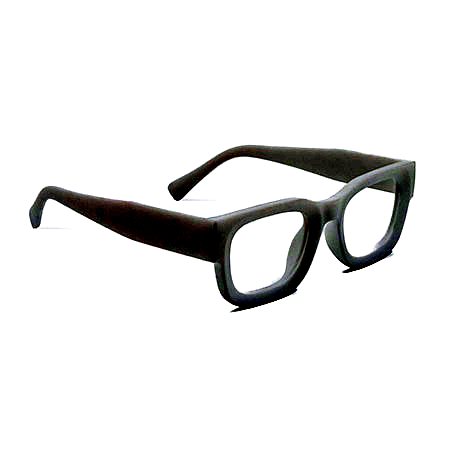
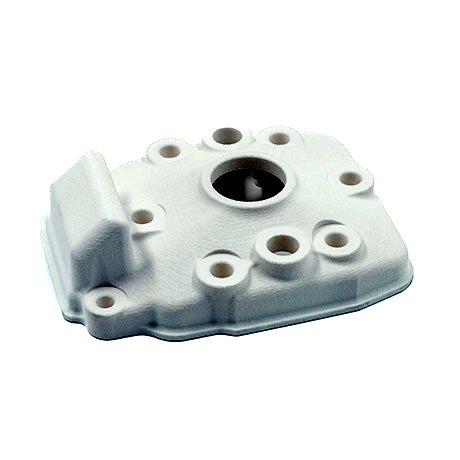
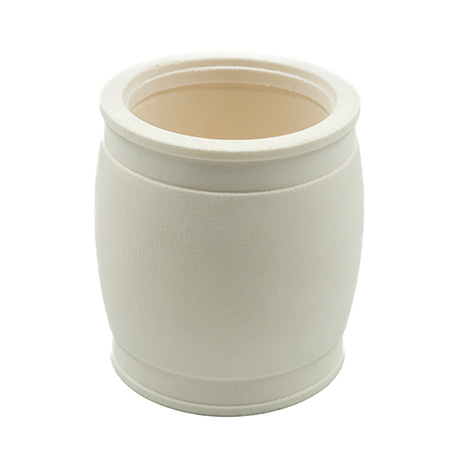
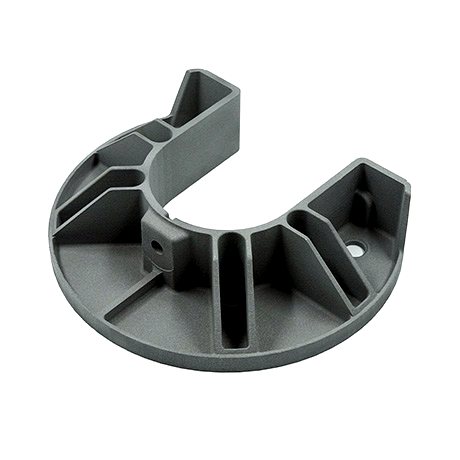
The trade-off is the finish. The surface is grainy and slightly porous — the typical “sandblasted” look of SLS nylon — with a grey/white base colour; for better aesthetics it requires post-processing such as dyeing, tumbling or smoothing. But when function matters more than appearance, it remains one of the most versatile processes available.
Typical applications
SLS is at its best where functional, robust parts in complex geometries are needed, rather than flawless aesthetic surfaces. Its natural fields are end-use component production in small and medium series, technical brackets and housings, ducts and manifolds with internal channels, spare and custom parts, and functional prototypes destined for real mechanical testing. Volume nesting also makes it particularly cost-effective when printing many parts together, driving down the unit cost. In general, any context where strength, geometric freedom and chamber-fill efficiency matter more than a mirror finish.