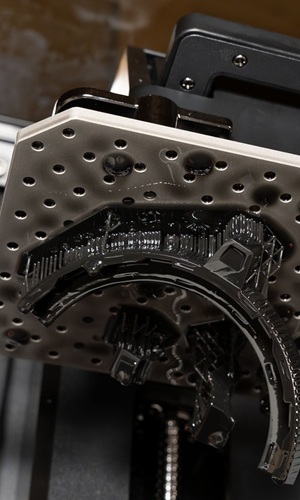
What Digital Light Processing is
DLP (Digital Light Processing) printing is a photopolymerisation technology that solidifies liquid, UV-sensitive resins layer by layer. Unlike SLA, which traces each cross-section point by point with a laser, DLP uses a digital projector (based on a DMD chip, Digital Micromirror Device) that cures the whole layer in a single exposure. Each layer is projected as an image made of pixels (voxels), which makes print time independent of geometric complexity and dependent only on the number of layers. The result is a fast process, able to reproduce very fine detail and particularly smooth surfaces.
Why choose it
DLP is the ideal choice when you need high resolution and an excellent surface finish on small and medium-sized components. Because the whole layer is cured simultaneously, production speed stays constant even on intricate geometries or with several parts arranged on the same build platform. The technology also offers a wide range of engineered resins — rigid, flexible, high-temperature, castable or biocompatible — that let you tailor the part’s properties to the specific application. It is the preferred solution for anyone seeking dimensional precision, crisp detail and short lead times.
Typical applications
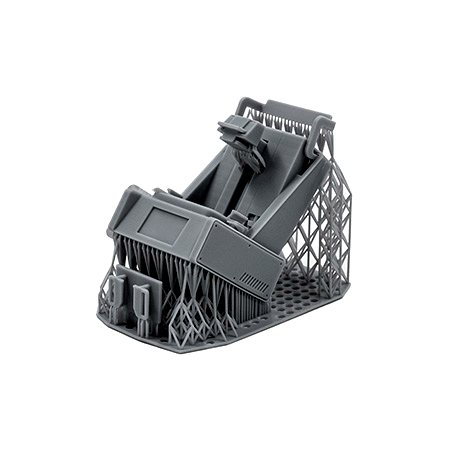
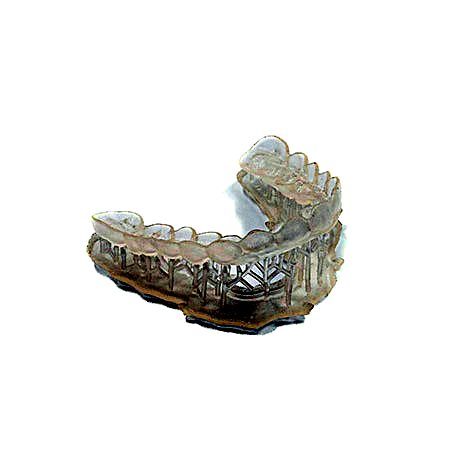
DLP is used wherever detail and surface quality are the priority. Among the most common applications: small aesthetic and functional prototypes, dental models and surgical guides, castable components for investment casting in jewellery, high-definition miniatures and figurines, as well as small technical parts with tight tolerances. It is particularly suited to parts that require fine textures, subtle detail and clean finishes straight off the printer.